

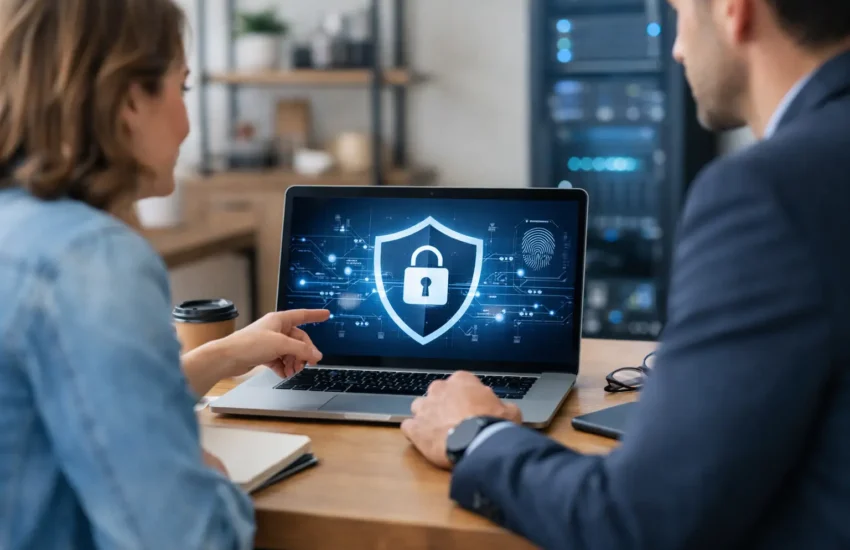
A single phishing email can lock up accounting, stall payroll, and put customer data at risk before lunch. That is why cybersecurity services for small business are no longer a nice-to-have add-on. They are part of basic business operations, right alongside internet access, backups, and support for the people using your systems every day.
Small businesses are frequent targets for a simple reason: attackers look for gaps. They know many companies rely on a mix of cloud apps, remote devices, aging networks, and limited internal IT time. They also know that even a short outage can hit cash flow, client trust, and team productivity hard. The right cybersecurity support helps close those gaps without forcing a business owner to become a security expert.
What cybersecurity services for small business actually include
When people hear the term cybersecurity, they often think of antivirus software and not much else. In practice, effective protection is broader and more operational than that. It covers the systems people use, the data the company depends on, the way access is controlled, and the response plan when something goes wrong.
A practical cybersecurity service usually starts with visibility. You need to know what devices are in use, which accounts have access to what, where sensitive data lives, and which systems are missing updates or protections. From there, the work moves into prevention, monitoring, and recovery.
For most small businesses, that means a mix of endpoint protection, email security, firewall management, patching, multi-factor authentication, backup oversight, user access control, and security monitoring. Depending on the company, it may also include cloud security reviews, compliance support, employee security awareness training, and incident response planning.
The key point is that cybersecurity is not one product. It is an ongoing service built around reducing risk while keeping the business usable and productive.
Why small businesses need a service model, not just software
Buying a few security tools feels straightforward. The problem is that tools still need to be configured, monitored, updated, and reviewed. Alerts need to be checked. Failed backups need to be noticed. New employee accounts need the right permissions. Old accounts need to be removed quickly. If nobody owns those tasks, risk builds quietly in the background.
That is where a service model makes sense. Small companies rarely need a large in-house security department, but they do need someone consistently paying attention. Ongoing cybersecurity services bring structure to work that otherwise gets handled only after a scare.
There is also a business reality here. Owners and operations leaders are balancing growth, staffing, vendors, customer expectations, and budgets. Security has to fit into that environment. A managed approach can provide predictable support and clearer accountability than trying to piece together different products and occasional consulting help.
The risks that cause the most damage
Not every threat is equally likely, and not every business has the same exposure. A company handling regulated client data has different priorities than a small professional services firm with a remote team. Still, a few risks show up across industries often enough to deserve close attention.
Phishing remains one of the biggest entry points. It is simple, cheap for attackers, and often effective because it targets people, not just systems. One employee clicking the wrong link can lead to credential theft, malware, or unauthorized payments.
Weak identity controls are another common issue. Shared logins, no multi-factor authentication, and old user accounts left active after someone leaves create easy openings. Cloud platforms are especially vulnerable when access is not reviewed regularly.
Unpatched systems also create avoidable exposure. Small businesses often delay updates because they fear disruption or lack the time to schedule maintenance. That trade-off can backfire if known vulnerabilities are left open.
Then there is backup failure. Many businesses assume they are protected because a backup tool exists somewhere in the environment. But if backups are incomplete, corrupted, or never tested, recovery may fail when it matters most.
How to evaluate cybersecurity services for small business
The best provider is not necessarily the one with the longest list of tools. It is the one that can explain how protection works in business terms and how support will be delivered on an ongoing basis.
Start with scope. Ask what is actually included each month. Does the service cover endpoints, email, firewalls, cloud accounts, patching, backups, and user access? Is security awareness training part of the plan, or separate? What happens when an alert appears after hours?
Then look at response and accountability. A small business should know who is watching, who is available when something happens, and what the escalation path looks like. Fast support matters, but so does clarity. If there is a suspected compromise, you want a partner who can investigate, contain the issue, and guide next steps without confusion.
Reporting also matters. Good cybersecurity support should not feel invisible. You should receive clear updates on system health, threats addressed, unresolved risks, and recommendations for improvement. These reports should help with decision-making, not bury you in technical noise.
Finally, ask whether the provider can support your broader IT environment. Security does not operate in isolation. Server maintenance, cloud configuration, user support, backup management, and infrastructure decisions all affect your risk level. Working with a partner that understands the full environment often leads to fewer blind spots.
What a right-sized security plan looks like
Small businesses do not need enterprise complexity for its own sake. They need the controls that match their size, risk profile, and operating model.
For a small office with a handful of employees, that may mean managed endpoint protection, secure email filtering, MFA, routine patching, monitored backups, and a properly managed firewall. For a growing business with remote staff, cloud apps, and customer data spread across platforms, the plan may need stronger identity management, device policies, access reviews, and more active monitoring.
This is where customization matters. Too little protection leaves obvious risk. Too much complexity can frustrate users, create support issues, and waste budget. A good provider helps strike the right balance between protection and practicality.
That balance can shift over time. A startup may begin with core protections and basic support, then add compliance controls, cloud hardening, or more formal response planning as the business grows. Security should scale with the company, not lag behind it.
The business value goes beyond threat prevention
The strongest case for cybersecurity is not just avoiding worst-case scenarios. It is supporting continuity every day. Secure, well-managed systems reduce downtime, improve user confidence, and make it easier to operate without constant technical distractions.
There is also a trust factor. Customers, partners, and vendors increasingly expect businesses to protect data responsibly. Even when no formal compliance requirement exists, weak security can affect contracts, reputation, and renewal conversations.
For leadership teams, cybersecurity services can also improve budgeting and planning. Instead of reacting to emergencies or replacing tools one at a time, they can work from a clearer roadmap with predictable support. That is especially valuable for companies without the capacity to build an internal IT and security function from scratch.
URBlink approaches this from the perspective of ongoing operations, not one-time fixes. That matters because most security issues are tied to day-to-day technology management as much as they are to major incidents.
Common mistakes to avoid
One common mistake is treating security as a project that can be finished. It cannot. Threats change, staff changes, software changes, and business needs change. Protection has to be maintained continuously.
Another mistake is assuming cyber insurance replaces cybersecurity. Insurance may help with financial recovery, but it does not prevent the incident, restore operations instantly, or repair lost trust. In many cases, insurers also expect specific controls to be in place before a claim is approved.
A third mistake is separating IT support and security too sharply. In theory, they are distinct disciplines. In practice, they overlap constantly. Device management, onboarding, permissions, updates, network health, and backups all shape your security posture.
Choosing a partner you can grow with
Small businesses need more than a vendor that installs tools and checks boxes. They need a partner that understands how technology supports operations, client service, and growth. The right cybersecurity relationship should make the business more resilient without making daily work harder.
That usually comes down to consistency, communication, and fit. You want a team that can explain risk clearly, act quickly when needed, and adapt services as your environment changes. You also want support that feels practical, not alarmist.
If your team is already juggling support requests, cloud apps, remote access, and backup concerns, cybersecurity does not need to become another separate burden. With the right service model, it becomes part of a more stable and manageable technology foundation. That gives small businesses something every leader values: fewer surprises, stronger continuity, and more room to focus on the work that actually moves the business forward.
